WhatsApp Business API: The Ultimate Growth Engine for D2C Brands in 2026
Introduction: Why WhatsApp Business API Is a Game-Changer for D2C Brands
In today’s hyper-competitive digital commerce landscape, direct-to-consumer (D2C) brands live or die by how well they communicate with customers. Email open rates are falling, ads are getting more expensive, and customers expect instant, personalized responses.
This is exactly where WhatsApp Business API comes in.
With over 2 billion active users worldwide, WhatsApp has become the most trusted and frequently used messaging app on the planet. For D2C brands, it offers something no other channel can match: high engagement, real-time conversations, and end-to-end personalization at scale.
Unlike the basic WhatsApp Business app, WhatsApp Business API is designed for medium to large businesses that want automation, CRM integration, chatbots, and advanced analytics—without losing the human touch.
In this in-depth guide, we’ll explore how D2C brands can use WhatsApp Business API to:
- Increase conversions
- Reduce customer support costs
- Recover abandoned carts
- Build loyalty and retention
- Scale conversations without chaos
If you’re building or scaling a D2C brand, this guide is for you.
What Is WhatsApp Business API?
Understanding WhatsApp Business API
WhatsApp Business API is an official, enterprise-grade messaging solution that allows businesses to communicate with customers programmatically. It’s owned and managed by Meta Platforms, ensuring security, reliability, and global reach.
Unlike the standard WhatsApp Business app, the API:
- Does not have a standalone interface
- Requires integration with software platforms
- Supports automation, chatbots, and CRM workflows
In short, it’s built for scale.
WhatsApp Business App vs WhatsApp Business API
| FeatureBusiness AppBusiness API | ||
| Best for | Small businesses | Growing & enterprise D2C brands |
| Users | Limited devices | Unlimited agents |
| Automation | Very limited | Advanced chatbots & workflows |
| CRM integration | ❌ | ✅ |
| Notifications | ❌ | ✅ |
| Scalability | Low | High |
For D2C brands handling hundreds or thousands of customer conversations daily, the choice is obvious.
Why D2C Brands Are Rapidly Adopting WhatsApp Business API
1. Unmatched Open and Response Rates
WhatsApp messages have 98% open rates and 45–60% response rates, compared to email’s 20–25%. For D2C brands, this means:
- Promotions actually get seen
- Customers respond faster
- Fewer touchpoints needed to convert
2. Customers Prefer Conversational Commerce
Modern consumers want conversations, not tickets. WhatsApp enables:
- Two-way real-time messaging
- Personalized recommendations
- Human + bot hybrid experiences
This aligns perfectly with the D2C promise of direct, authentic relationships.
3. End-to-End Customer Lifecycle Management
From discovery to repeat purchase, WhatsApp Business API supports:
- Lead generation
- Order confirmation
- Shipping updates
- Post-purchase support
- Upsells and cross-sells
All in one channel.
Key Use Cases of WhatsApp Business API for D2C Brands


1. Abandoned Cart Recovery
Cart abandonment is one of the biggest revenue leaks for D2C brands.
With WhatsApp Business API, brands can:
- Send automated reminders
- Offer time-limited discounts
- Answer objections instantly
📈 Many D2C brands see 20–40% recovery rates, far higher than email.
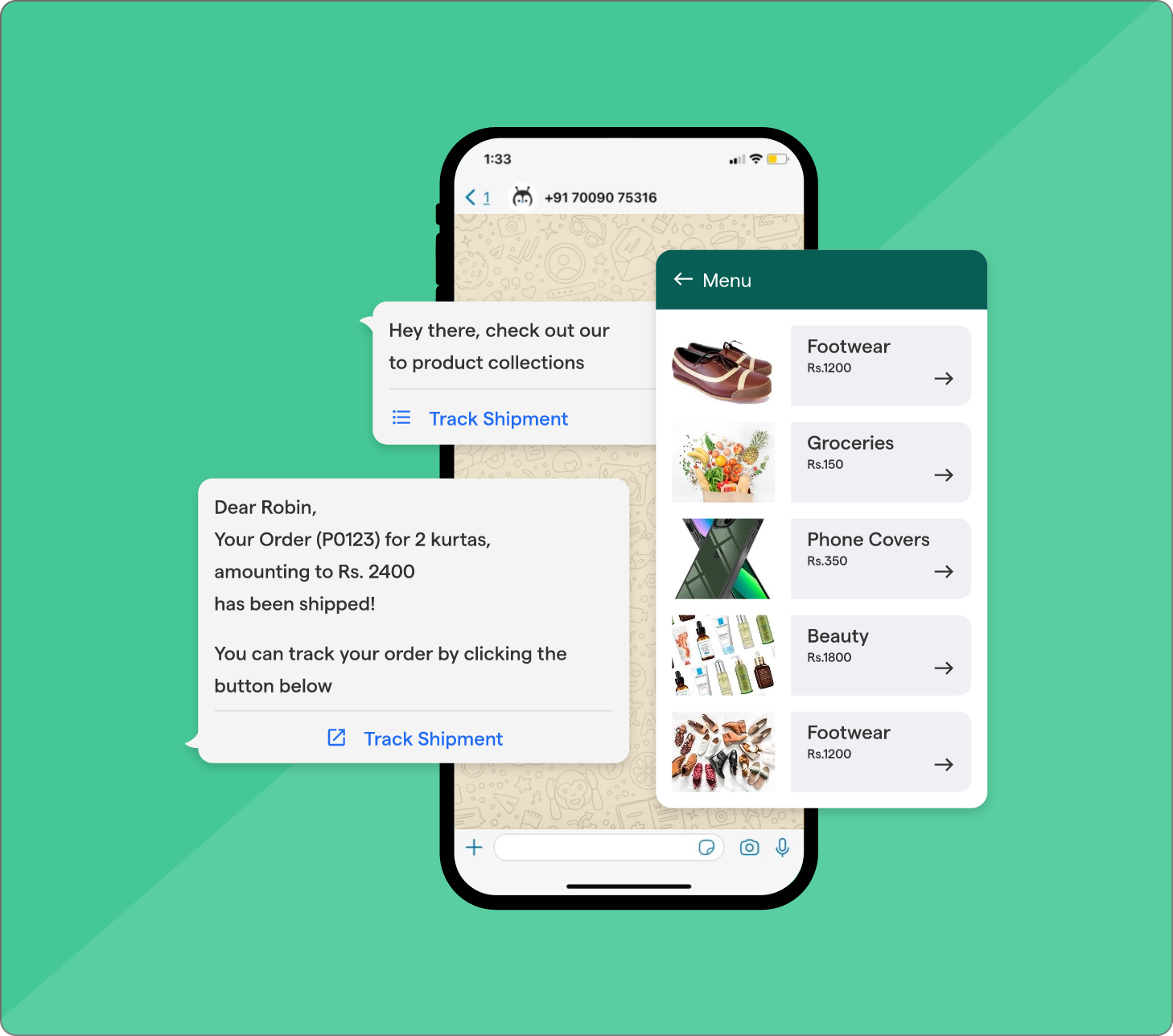
2. Order & Shipping Notifications
Replace impersonal SMS with rich WhatsApp messages:
- Order confirmations
- Shipping updates
- Delivery alerts
This reduces “Where is my order?” tickets and improves customer trust.
3. Automated Customer Support
Using chatbots and AI:
- Answer FAQs instantly
- Handle returns & refunds
- Escalate complex issues to humans
Result: Lower support costs + faster resolution times.
4. Personalized Product Recommendations
Based on browsing or purchase history, WhatsApp can deliver:
- Tailored product suggestions
- Back-in-stock alerts
- Exclusive drops for VIP customers
This feels personal, not promotional.
5. Feedback, Reviews, and Loyalty
Post-purchase WhatsApp flows can:
- Collect reviews
- Run NPS surveys
- Share loyalty rewards
Happy customers become repeat buyers—and brand advocates.
How WhatsApp Business API Drives Revenue for D2C Brands
Conversational Funnels Convert Better
Instead of pushing customers to static landing pages, WhatsApp enables:
- Guided buying journeys
- Objection handling in real time
- Assisted checkouts
This shortens the sales cycle dramatically.
Higher Customer Lifetime Value (CLV)
By staying connected post-purchase, brands:
- Re-engage past buyers
- Launch products instantly
- Build emotional loyalty
WhatsApp becomes a retention engine, not just a marketing channel.
Integrating WhatsApp Business API with Your D2C Tech Stack
Common Integrations
- CRM (HubSpot, Salesforce)
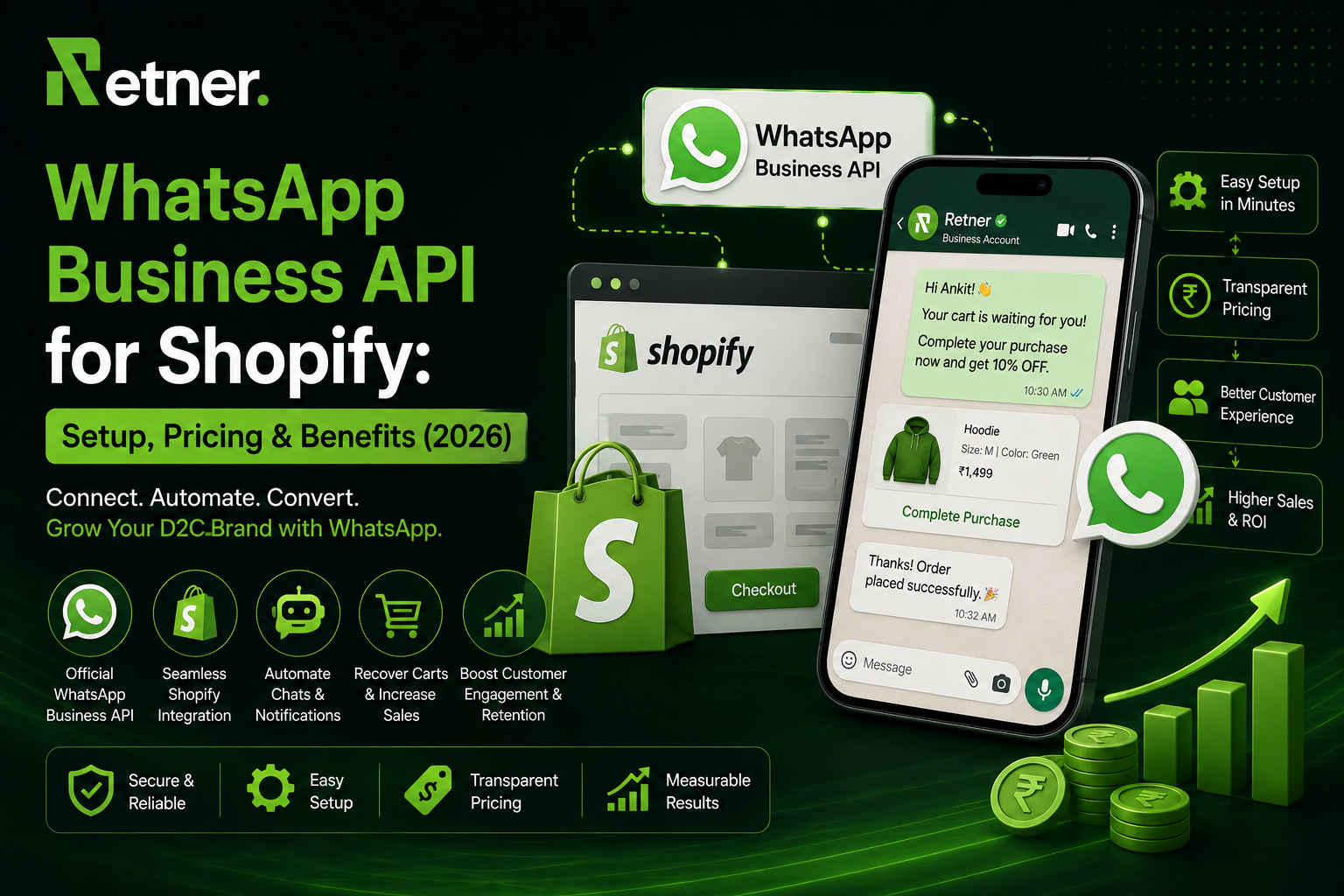
- Ecommerce platforms (Shopify, WooCommerce)
- Payment gateways
- Analytics & CDP tools
This creates a single source of truth for customer data.
Why API-Based Integration Matters
API integration allows:
- Custom workflows
- Scalable automation
- Data-driven personalization
Platforms like retner.ai make this process seamless by offering ready-to-use solutions tailored for D2C brands.
👉 Learn more at https://retner.ai
Compliance, Opt-Ins, and Messaging Rules
Customer Opt-In Is Mandatory
D2C brands must:
- Get explicit user consent
- Clearly explain message purpose
Message Types
- Session messages: Free-form replies within 24 hours
- Template messages: Pre-approved notifications and promotions
Following these rules ensures:
- High deliverability
- Account safety
- Long-term scalability
Best Practices for D2C Brands Using WhatsApp Business API
1. Don’t Over-Automate
Automation should enhance—not replace—human interaction.
2. Personalize Every Message
Use names, order details, and preferences.
3. Segment Your Audience
Send relevant messages to the right customers.
4. Track Performance Metrics
Monitor open rates, CTR, conversions, and response time.
Common Challenges (And How to Solve Them)
| ChallengeSolution | |
| High setup complexity | Use an API provider or platform |
| Compliance confusion | Follow Meta guidelines strictly |
| Message fatigue | Segment and limit broadcasts |
| Scaling support | Combine bots with human agents |
Future of WhatsApp Business API for D2C Brands
WhatsApp is evolving fast:
- AI-powered commerce
- In-chat payments
- Rich catalogs & product discovery
Early adopters will gain a massive competitive edge.
FAQs
1. Is WhatsApp Business API free?
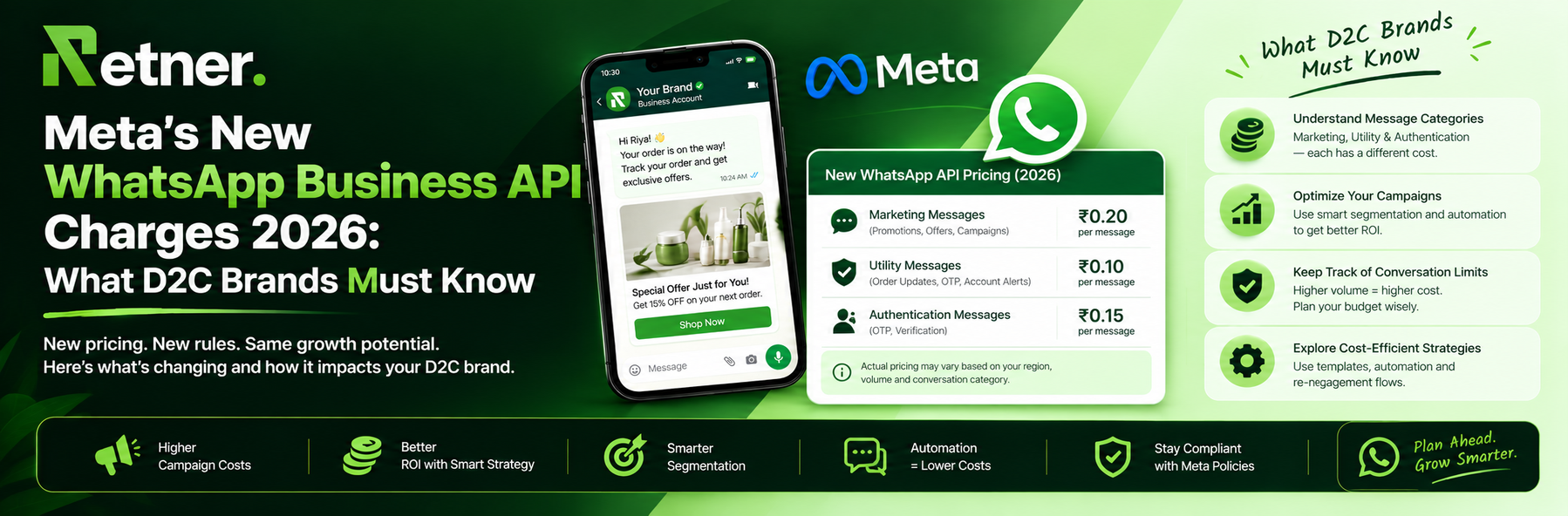
No. Pricing is conversation-based and varies by region and use case.
2. Can small D2C brands use it?
Yes, especially if they plan to scale customer interactions.
3. Is WhatsApp Business API better than email marketing?
For engagement and conversions, yes. Email still works best as a support channel.
4. How long does setup take?
Typically 3–7 days with the right provider.
5. Can I automate sales on WhatsApp?
Absolutely. Chatbots and workflows enable full conversational commerce.
6. Is WhatsApp Business API secure?
Yes. Messages are end-to-end encrypted and compliant with Meta’s policies.
Conclusion: Why D2C Brands Should Act Now
For D2C brands, WhatsApp Business API is no longer optional—it’s essential.
It combines:
- High engagement
- Real-time conversations
- Automation at scale
- Strong ROI
Brands that adopt early build stronger customer relationships, reduce costs, and unlock faster growth.
If your D2C brand is serious about retention, revenue, and relationships, now is the time to invest in WhatsApp Business API—powered by the right platform and strategy.
8x Return On WhatsApp Ads Spend.
Book a demo and we will get you started on proven WhatsApp marketing strategies