
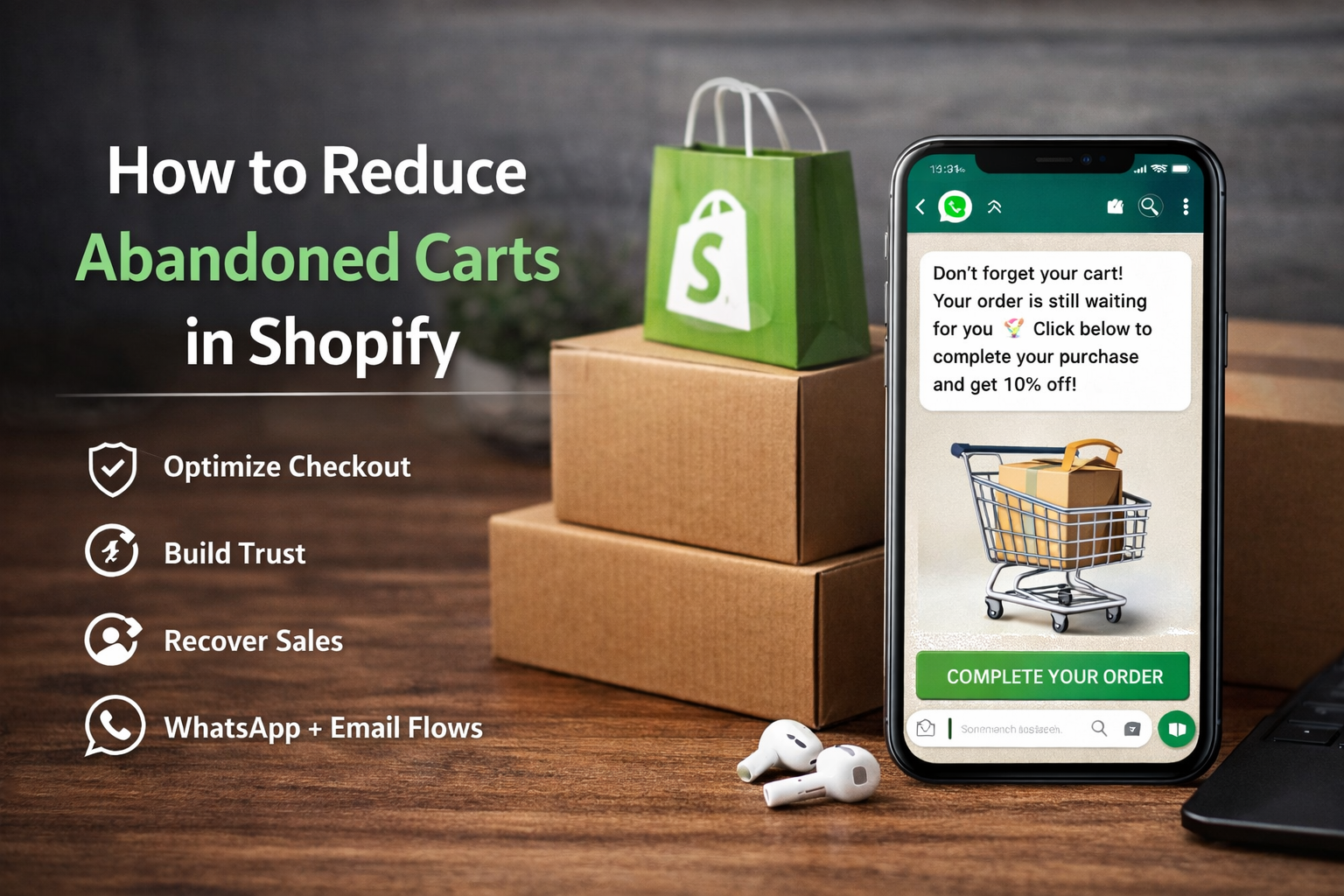
Introduction
Cart abandonment is one of the biggest revenue leaks in e-commerce.
Most Shopify stores lose 60–80% of potential customers between “Add to Cart” and “Checkout Complete.”
The instinct is to fix this with more reminders.
That’s a mistake.
Abandonment is not just a follow-up problem. It’s a conversion problem across the entire funnel.
If you don’t fix the root causes, recovery flows will only bring marginal gains.
This guide breaks down how to actually reduce abandoned carts in Shopify, not just chase them.
What Is Cart Abandonment in Shopify?
Cart abandonment happens when a customer adds products to their cart but leaves without completing the purchase.
Why Customers Abandon Carts (Real Reasons)
Most brands assume users are “not ready.”
In reality, they are pushed away.
The biggest causes:
- Unexpected costs (shipping, COD fees, taxes)
- Complicated checkout process
- Lack of trust (reviews, policies missing)
- Limited payment options (especially UPI in India)
- Slow loading pages
- Delivery uncertainty
If you ignore these, no automation will save you.
1. Optimize Your Shopify Checkout (Highest Impact)
Checkout optimization alone can reduce abandonment significantly.
Key actions:
- Enable guest checkout
- Reduce form fields
- Enable autofill and address suggestions
- Improve checkout speed
- Remove unnecessary distractions
Critical insight:
Every extra step in checkout reduces conversion.
2. Show Pricing Transparency Early
Hidden costs are the #1 conversion killer.
Fix this by:
- Showing shipping cost on product page
- Displaying COD charges upfront
- Highlighting free shipping thresholds
- Avoiding last-step surprises
Example:
“Free shipping above ₹999 | COD available”
Clarity builds confidence.
3. Build Trust at Every Step
Trust is often undervalued but highly impactful.
Add these elements:
- COD availability badge
- Easy return policy (7–20 days)
- Customer reviews
- Delivery estimates
- “Trusted by X customers”
Trust reduces hesitation more than discounts.
4. Use Exit-Intent Offers Smartly
Discounts are not a strategy.
They are a tool.
Use logic-based offers:
- First-time visitor → small discount
- Returning user → urgency messaging
- High cart value → bundle upsell
Blind discounts reduce margins without improving conversion quality.
5. Automate Abandoned Cart Recovery (Email + WhatsApp)
Once the basics are fixed, automation becomes powerful.
Email Recovery Flow
- 30 minutes → reminder
- 6 hours → product benefits
- 24 hours → urgency or offer
WhatsApp Recovery Flow (High Conversion)
- 15–30 minutes → quick reminder
- 2–3 hours → social proof
- 24 hours → discount or urgency
Why WhatsApp works:
- High open rates
- Instant visibility
- Conversational experience
6. Use Behavior-Based Personalization
This is where most Shopify brands underperform.
Instead of generic messages:
- Viewed product → send education
- Added to cart → send urgency
- COD user → send trust-building message
Key insight:
Personalization increases recovery more than frequency.
7. Add WhatsApp Support at Checkout
Many users abandon due to unanswered questions.
Common doubts:
- “Size sahi hoga?”
- “Delivery kab aayega?”
- “COD available hai?”
A WhatsApp chat option can convert these users instantly.
8. Optimize for Mobile First
Most Shopify traffic in India is mobile.
Optimize:
- Sticky “Add to Cart” button
- Fast loading pages
- Simple checkout UI
- Easy input fields
A poor mobile experience = higher abandonment.
9. Handle COD Orders Smartly
COD increases conversion, but also fake orders.
Solve with:
- OTP verification
- WhatsApp confirmation
- Smart COD eligibility rules
This improves both conversion and profitability.
The Retner Approach to Cart Recovery
Instead of relying only on reminders, platforms like Retner focus on end-to-end conversion optimization.
That includes:
- real-time WhatsApp recovery
- AI-based customer segmentation
- behavior-triggered messaging
- COD verification automation
- omnichannel engagement
This shifts the strategy from reactive recovery → proactive conversion optimization.
The Core Framework
Use this formula:
Cart Recovery = Reduce Friction + Build Trust + Smart Timing + Personalization
If any one of these is missing, results drop.
Metrics You Should Track
- Cart abandonment rate
- Checkout completion rate
- Recovery rate (email vs WhatsApp)
- AOV after recovery
- COD vs prepaid conversion
8x Return On WhatsApp Ads Spend.
Book a demo and we will get you started on proven WhatsApp marketing strategies
Table of Contents
Frequently Asked Questions
Related Articles
View all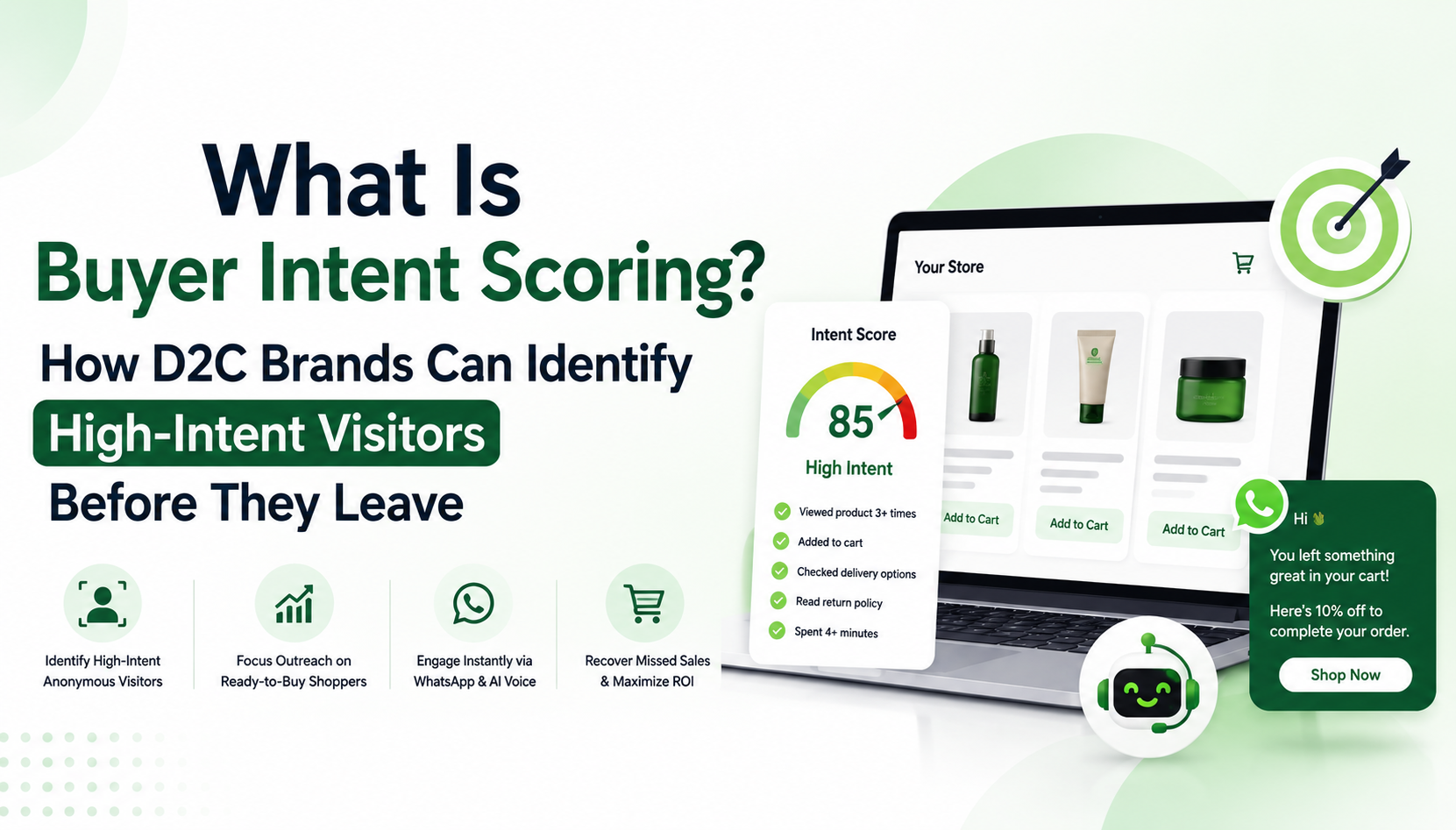
What Is Buyer Intent Scoring? How D2C Brands Can Identify High-Intent Visitors Before They Leave
Buyer intent scoring helps D2C brands identify which anonymous website visitors are most likely to buy — before they leave. Learn how micro-behavior signals, visitor identification, and intent-based engagement can recover lost revenue on your Shopify store.
Why Your Shopify Store Needs an AI Support Agent (Not Just a FAQ Page)
This guide explains what AI support agents are, why FAQ pages are no longer enough, and exactly how deploying an AI agent on your Shopify store drives more sales, fewer support tickets, and stronger customer retention.
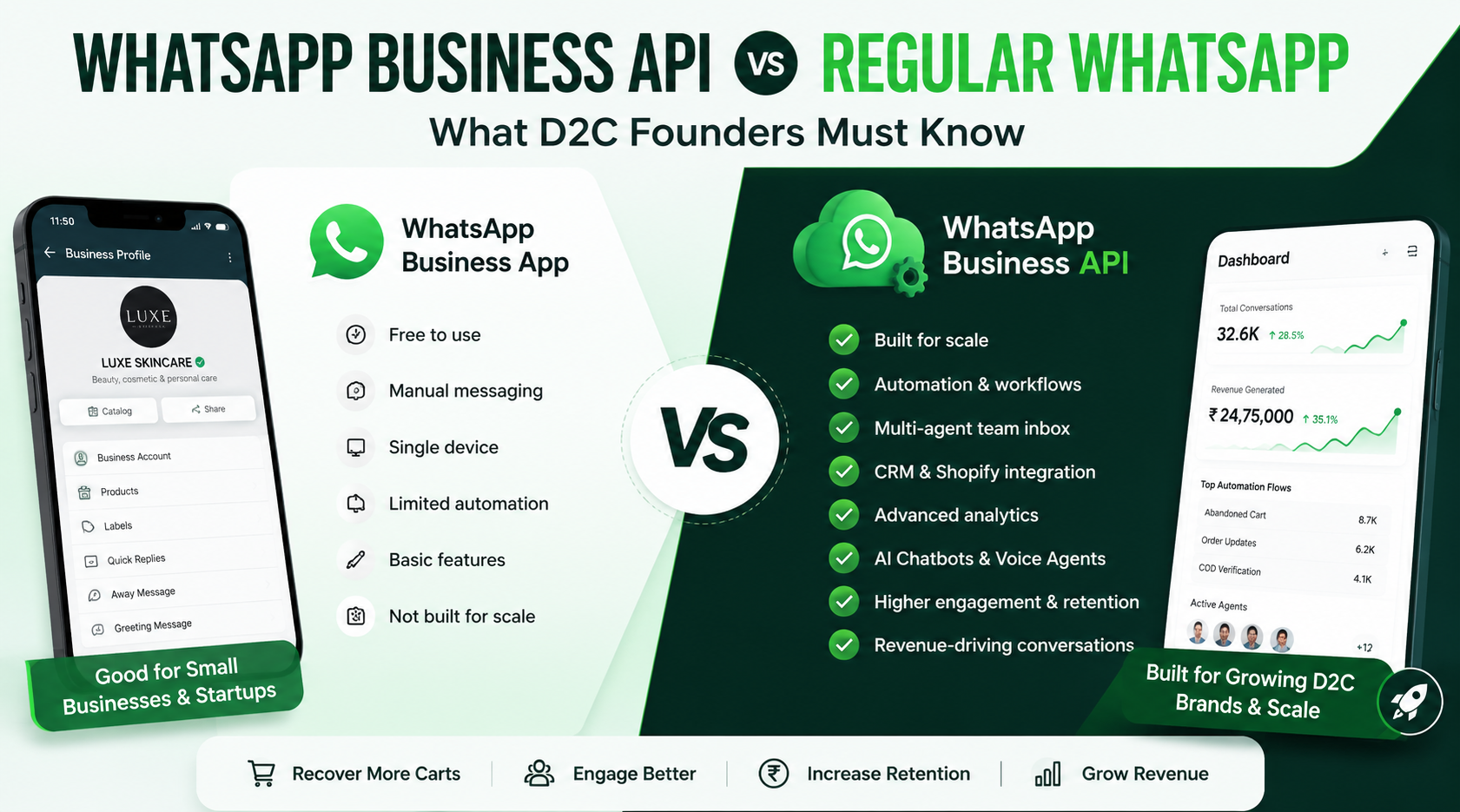
WhatsApp Business API vs Regular WhatsApp: What D2C Founders Must Know
Compare WhatsApp Business API and the regular WhatsApp Business App. Learn the differences, benefits, limitations, and which option is best for scaling your D2C brand.
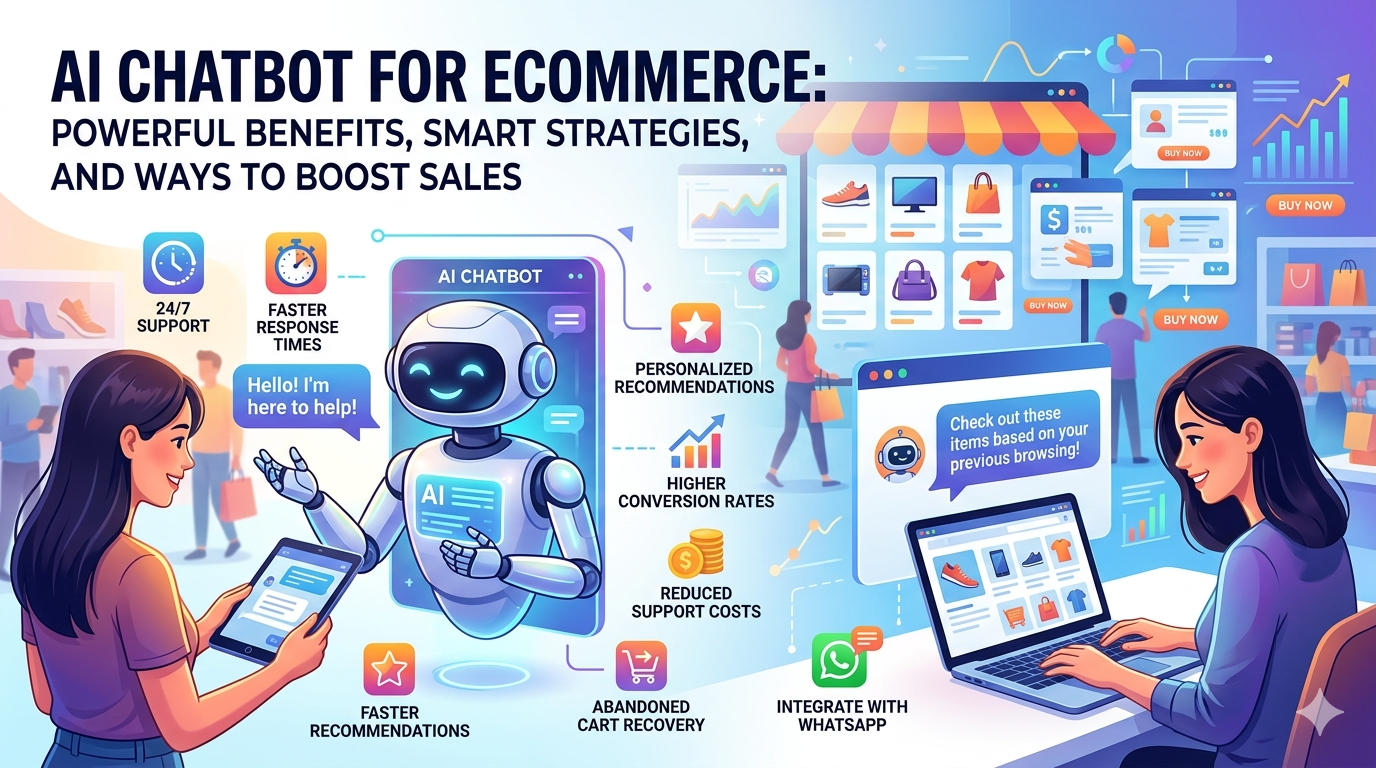
AI Chatbot for Ecommerce: Powerful Benefits, Smart Strategies, and Ways to Boost Sales
Discover how AI chatbots help e-commerce brands boost sales, automate support, improve customer engagement, and increase conversions with smarter automation strategies.