
WhatsApp Business API vs Regular WhatsApp: What D2C Founders Must Know
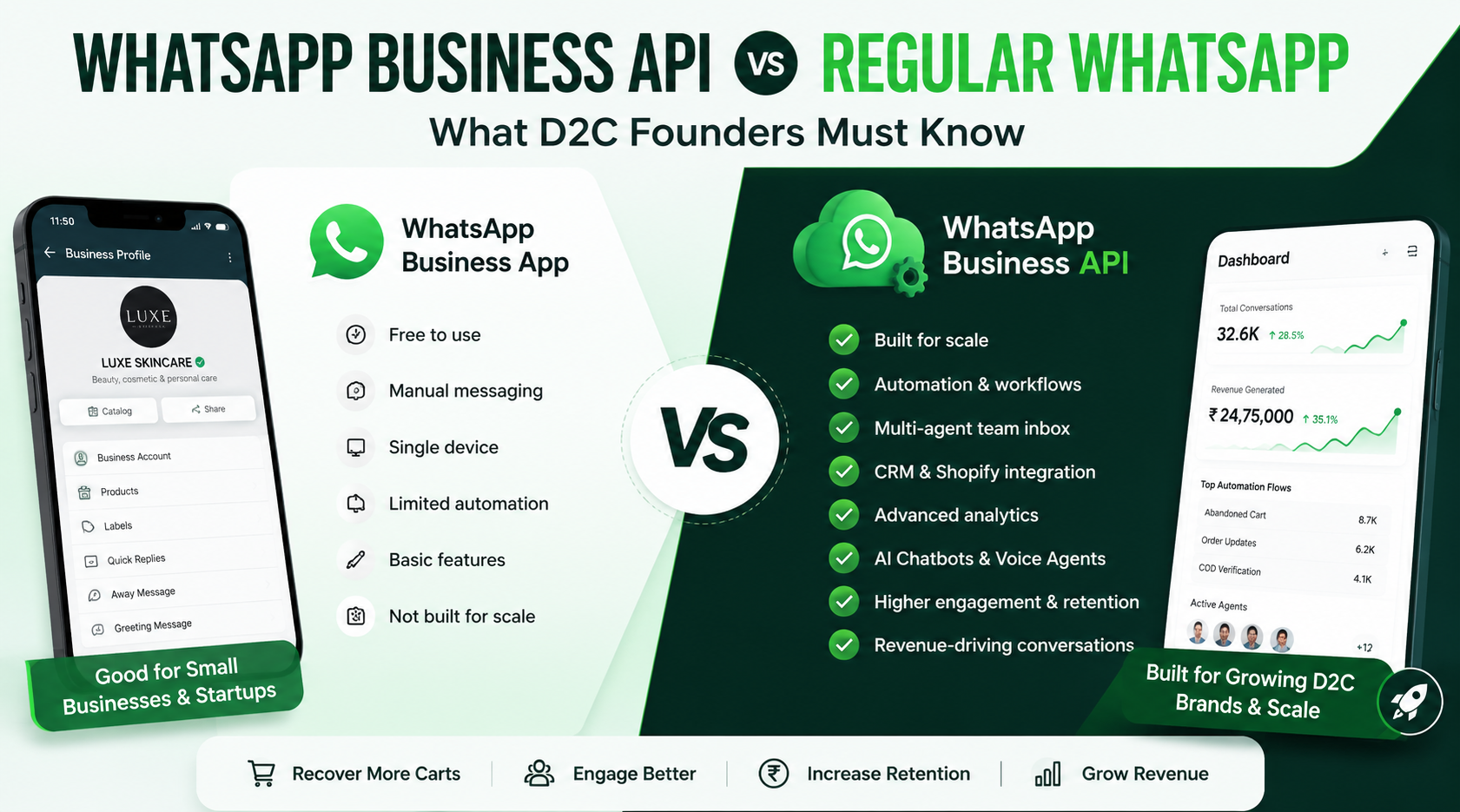
If You're Serious About Scaling, This Is a Decision You Can't Ignore
Many D2C founders start with WhatsApp because it's familiar, easy to use, and customers already trust it.
Initially, the regular WhatsApp Business App works well.
You can:
- chat with customers
- answer support queries
- send product photos
- manage a few hundred conversations
But eventually, growth creates a problem.
As orders increase, customer conversations multiply.
And that's where founders discover something important:
The WhatsApp Business App and WhatsApp Business API are not the same thing.
Understanding this difference can determine whether WhatsApp becomes a growth engine—or an operational bottleneck.
What Is the WhatsApp Business App?
The WhatsApp Business App is the free application designed primarily for small businesses.
It offers:
- Business profile
- Quick replies
- Labels
- Product catalog
- Greeting messages
- Basic automation
For early-stage businesses, it's often enough.
But it wasn't built for high-growth ecommerce operations.
What Is the WhatsApp Business API?
The WhatsApp Business API is Meta's enterprise-grade infrastructure for businesses that need advanced communication and automation.
Unlike the regular app, the API allows businesses to:
- Automate conversations
- Integrate with Shopify
- Connect CRM systems
- Run lifecycle campaigns
- Send transactional updates
- Manage thousands of conversations simultaneously
- Deploy AI chatbots and voice agents
Think of it this way:
Business App = Manual communication
Business API = Scalable customer engagement infrastructure
WhatsApp Business App vs WhatsApp Business API
| FeatureBusiness AppBusiness API | ||
| Free to use | ✅ | ❌ |
| Manual customer chats | ✅ | ✅ |
| Team inbox support | Limited | ✅ |
| Shopify integration | ❌ | ✅ |
| CRM integration | ❌ | ✅ |
| Automated workflows | Very limited | ✅ |
| Abandoned cart recovery | ❌ | ✅ |
| Customer segmentation | ❌ | ✅ |
| AI chatbot support | ❌ | ✅ |
| Lifecycle automation | ❌ | ✅ |
| Scale to thousands of users | ❌ | ✅ |
The Biggest Limitation of the Regular WhatsApp Business App
The issue isn't messaging.
The issue is scalability.
Imagine:
- 500 orders per month
- 2,000 customers
- Multiple support agents
- Abandoned cart recovery
- COD verification
- Repeat purchase campaigns
Managing all of that manually becomes impossible.
The Business App simply wasn't designed for this level of complexity.
Why D2C Brands Eventually Move to the API
Most successful D2C brands transition because they need automation.
Specifically:
1. Abandoned Cart Recovery
When a customer leaves checkout:
API-powered automation can:
- trigger reminders
- answer objections
- recover lost revenue
Automatically.
2. Post-Purchase Communication
Customers expect updates.
The API enables:
- order confirmations
- shipping notifications
- delivery updates
without manual effort.
3. Customer Retention
Retention is where ecommerce profitability is built.
API-based systems allow:
- reorder reminders
- winback campaigns
- customer lifecycle journeys
that run continuously.
4. COD Verification
For Indian D2C brands, this is huge.
API automation helps:
- confirm intent
- validate orders
- reduce fake COD purchases
- lower RTO rates
The Hidden Advantage Most Founders Miss
Many founders evaluate WhatsApp solely as a support channel.
That's a mistake.
The biggest value of the API isn't support.
It's revenue generation.
Because once automation is possible, WhatsApp becomes:
- a marketing channel
- a retention channel
- a sales channel
- a customer experience channel
all at the same time.
When Should You Upgrade to WhatsApp Business API?
You should seriously consider upgrading if:
✅ You're processing hundreds of orders monthly
✅ Customer conversations are becoming difficult to manage
✅ You want abandoned cart automation
✅ You need Shopify integration
✅ You're investing in retention marketing
✅ Multiple team members need access
✅ You're running WhatsApp campaigns regularly
If several of these apply, you've likely outgrown the Business App.
Common Misconceptions About WhatsApp Business API
Myth #1: It's Only for Large Enterprises
Not anymore.
Many growing D2C brands use the API long before becoming large enterprises.
Myth #2: It's Difficult to Set Up
Modern platforms have simplified onboarding significantly.
Most brands can be operational quickly.
Myth #3: It's Just for Customer Support
Support is only one use case.
Most high-growth brands use the API for:
- retention
- sales
- automation
- lifecycle marketing
Why the API Matters More in 2026 Than Ever
Customer acquisition costs are rising.
Competition is increasing.
Margins are tightening.
Brands can no longer rely solely on:
- Meta Ads
- influencer marketing
- discounting
They need stronger retention systems.
And retention requires scalable customer communication.
That's exactly what the WhatsApp Business API enables.
How Retner Helps D2C Brands Scale With WhatsApp API
Retner helps ecommerce brands unlock the full potential of the WhatsApp Business API through:
- Abandoned cart recovery
- Customer retention automation
- Meta Ads lead synchronization
- COD verification flows
- AI chatbots
- AI voice agents
- Lifecycle marketing automation
- Shopify and WooCommerce integrations
Instead of manually managing conversations, brands can build automated systems that drive revenue and retention at scale.
Business App vs API: The Real Answer
For a small business handling a modest number of customer conversations, the WhatsApp Business App may be enough.
For a growing D2C brand focused on:
- scale
- retention
- automation
- customer experience
the WhatsApp Business API becomes a necessity rather than a luxury.
The question isn't:
"Do we need the API today?"
The better question is:
"At what stage will manual WhatsApp management start slowing our growth?"
For many D2C brands, that stage arrives much sooner than expected.
8x Return On WhatsApp Ads Spend.
Book a demo and we will get you started on proven WhatsApp marketing strategies
Table of Contents
Frequently Asked Questions
Related Articles
View all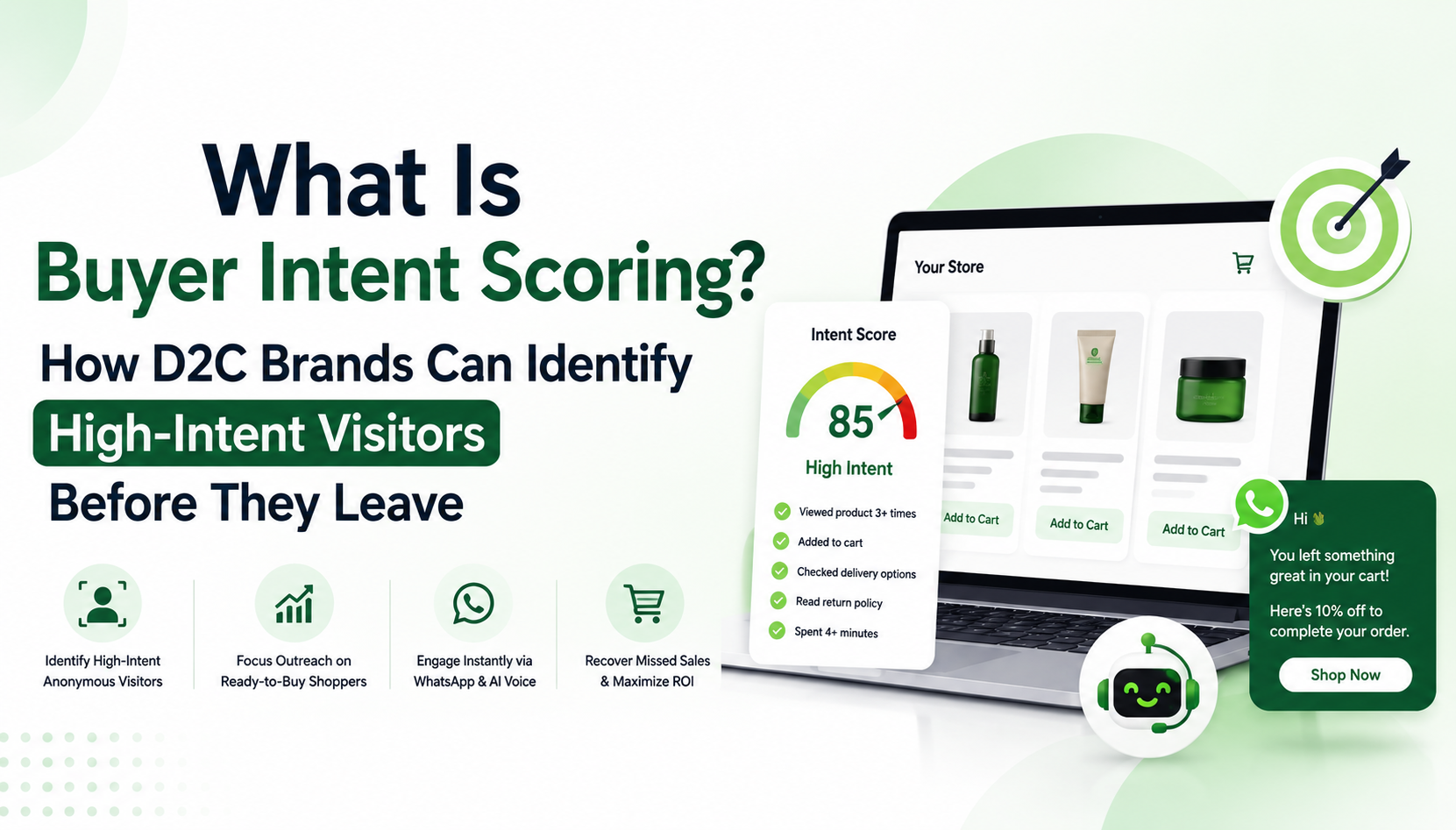
What Is Buyer Intent Scoring? How D2C Brands Can Identify High-Intent Visitors Before They Leave
Buyer intent scoring helps D2C brands identify which anonymous website visitors are most likely to buy — before they leave. Learn how micro-behavior signals, visitor identification, and intent-based engagement can recover lost revenue on your Shopify store.
Why Your Shopify Store Needs an AI Support Agent (Not Just a FAQ Page)
This guide explains what AI support agents are, why FAQ pages are no longer enough, and exactly how deploying an AI agent on your Shopify store drives more sales, fewer support tickets, and stronger customer retention.
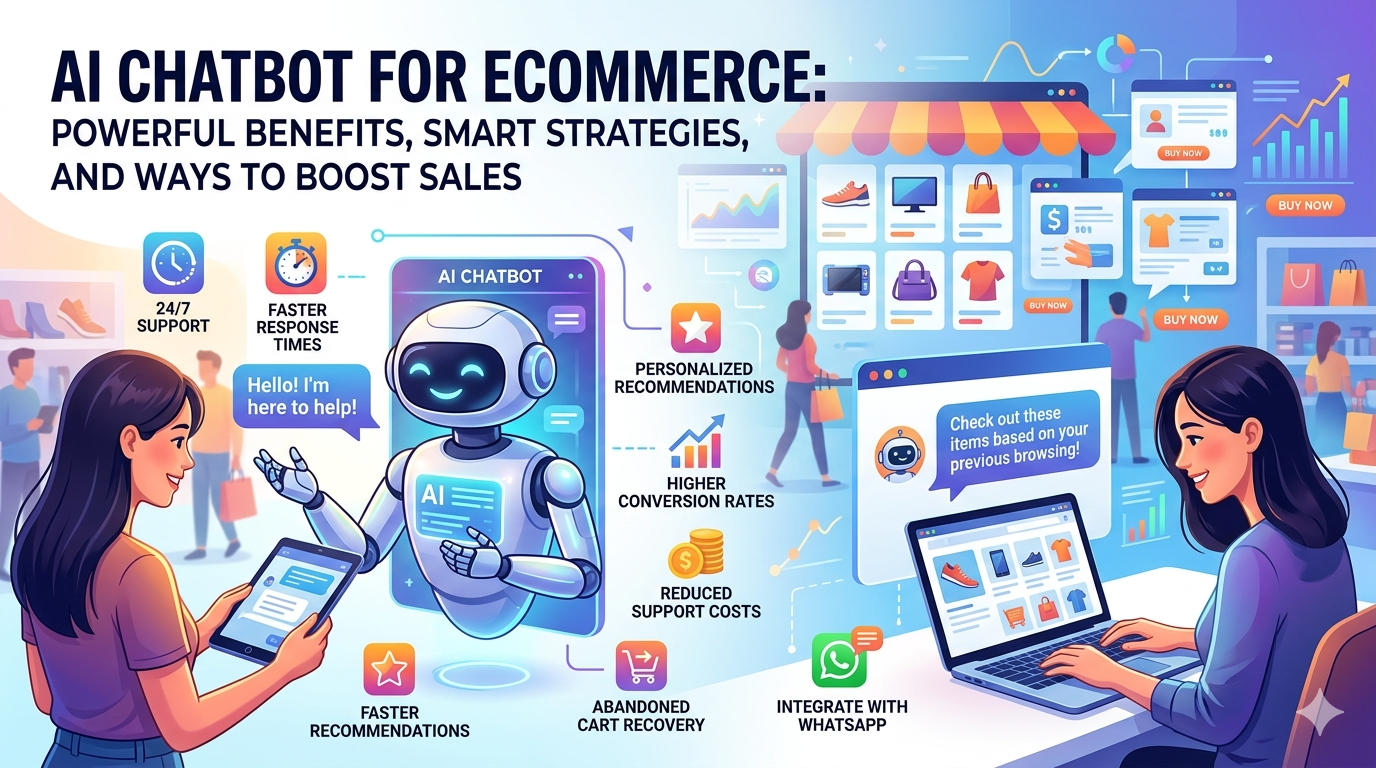
AI Chatbot for Ecommerce: Powerful Benefits, Smart Strategies, and Ways to Boost Sales
Discover how AI chatbots help e-commerce brands boost sales, automate support, improve customer engagement, and increase conversions with smarter automation strategies.
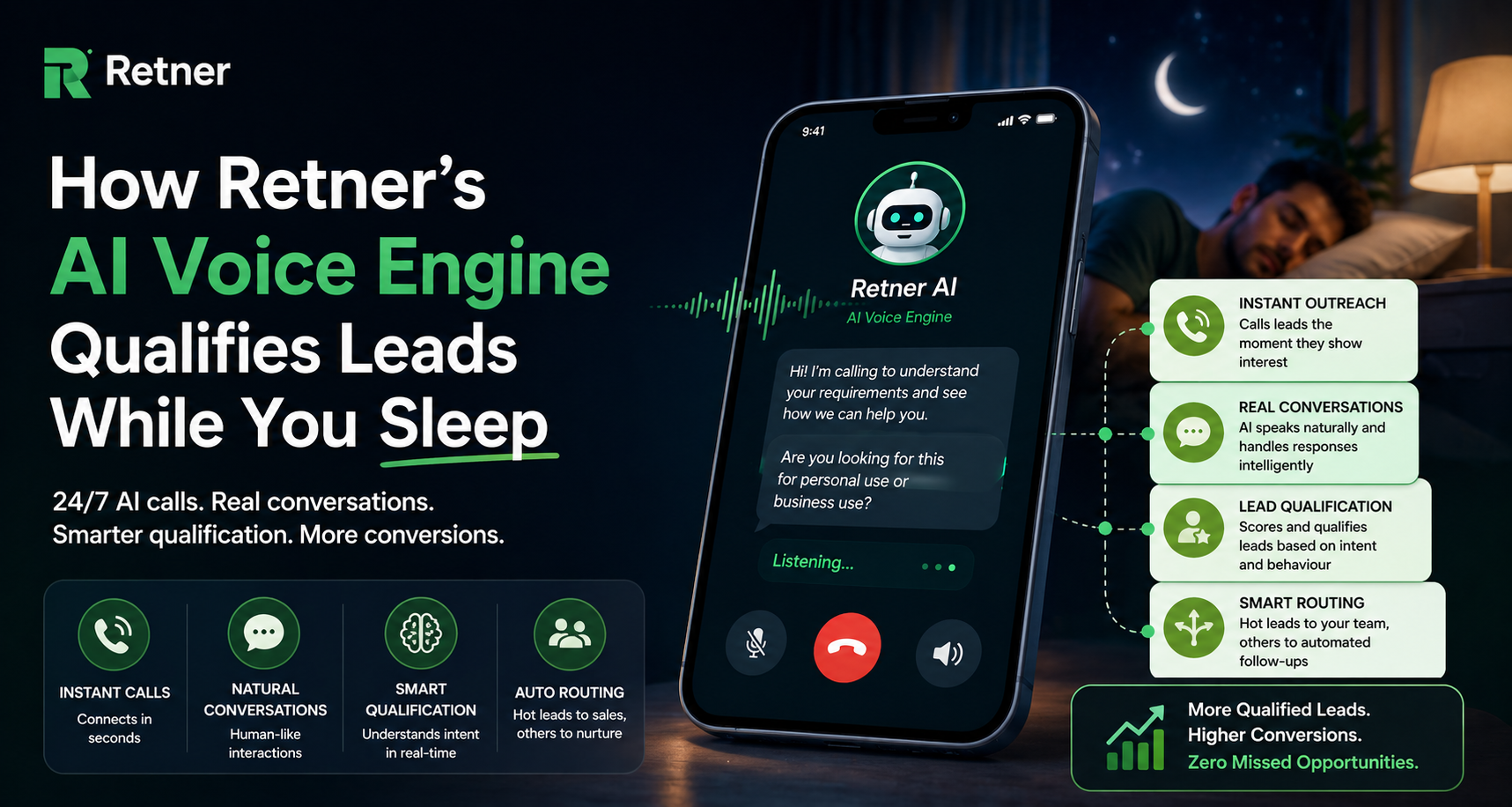
How Retner’s AI Voice Engine Qualifies Leads While You Sleep
Discover how Retner’s AI voice engine qualifies leads automatically using real-time conversations, scoring, and smart routing—so you never miss high-intent customers.